Showing posts with label Social Media. Show all posts

Monday, August 27, 2012

3 Phase Strategy in Digital Commerce


It's been quite some time since my last post on "5 Pillars in the Internet Content Business", where I was discussing the areas to look at from content to advertising, access/browsing, payment, and fulfillment/monitoring. I have been busy but I am back with a couple of ideas brewing in my head.


Lately, I have been deliberating on what are the phases in which the various players in the markets are putting into play as they go-to-market in digital commerce. I came up with the following 3 phases which I would like to share and discuss with you - all comments most welcome to refine this further :-)

(1) Apps (& Content)


(2) Social

  • Today, we are also witness to the battle of the social networks - Facebook, Twitter, and recently and Google+ giving the former 2 a good run.
  • Consumer fatigue in the above "traditional" social networks amongst especially the millennials are leading to exits from social networks like Facebook to micro-blogs like Tumblr and more rapid and engaging conversations through instant messaging.
  • And so, instant messaging is also turning social.  And there are many players in the market - the popular WhatsApp, Naver Line, KakaoTalk, SK planet TicToc fast mobile messenger and more.
  • Tremendous opportunities abound to engage communities from apps drawn to the social messaging platforms, with a relevant content marketing calendar.


(3) Commerce

  • What we have been hearing like a broken record these days "Commerce is getting social"
  • Indeed by understanding the conversations taking place in social networks, microblogs, group boards etc, businesses would be able to discern patterns and profiles of consumer behaviours.
  • Not only will these consumer analytics help in the commerce of digital products but rather, end to end, with consumers buying time these days (ease of purchase key), businesses could look to explore differentiated offers via transmedia connecting people to a new world of entertainment (digital and physical merchandise).

Definitely non-prescriptive in the approach of how the above 3 phases "Apps-Social-Commerce" need to be deployed by businesses. It all boils down to sitting down and understanding the markets businesses would like to play in digital commerce and pursuing the relevant game-planning.

What do you think about the above 3 phases in digital commerce? What have your strategies been for your businesses and markets you play in?

Talk soon,
Nelson Wee
Catch me on Twitter @nelsonwee
Look me up on LinkedIn

Wednesday, February 8, 2012

3 Things You May Not Know About Mobile Social Games

I heard this remark recently, "Are Mobile Games Aladdin's Treasure Trove?" Is there a huge market potential in how mobile games are being reinvented or made "social"? Are the key market players laughing their way to the bank? With these questions in mind, here is now my introduction on the 3 things you may not know about the new uptrending market potential in mobile social games.


(1) What are mobile social games?
Mobile Social Games are multiplayer mobile games which are played on smartphones and tablets. These games are played in its own gaming social networks. Examples: Gree from Japan.

Its close relative "Online Social Games", are multiplayer online games which are played in social networks like Facebook. Example: Zynga.

Whereas, MMO games or "Massively multiplayer online" games refer more heavy loading games (graphics intensive and thousands of simultaneous online game play) and are played on PC or console, availed via retail or digital download. Example here would be Activision Blizzard games.

(2) Who are the key players in mobile social games?

When people mention "social games", Facebook games and Zynga come to mind, apparently owning the category in most parts of the world. Zynga has come to dominate the Online Social Games market which is played on the PC online platform. Other noteworthy market players in this space include Playfish (owned by EA) and Playdom (owned by Disney).

However, one should not forget the growing mobile social games market which is growing huge, especially in Asia (China, Korea, Japan). Big players here include Gree and DeNA from Japan.

(3) What is the market for mobile social games?
One word - HUGE! Did we not hear that 12% of Facebook revenues are accounted for by Zynga Facebook games? And there are various other market stats like:

• Worldwide social gaming market are set to grow from ~USD 6 billion in 2012 to ~8.6 billion in 2014 (the non-facebook games revenue out-stripping the facebook games revenues by more than 50%).

• 40% of worldwide social gaming revenues will come from Asia, given that Asians are more status conscious, and will purchase more avatars or in-game items to better represent themselves.

• Zynga made US $300M in a quarter in 2011 via PC online social games whilst Gree made US $400M in the same quarter.

The social gaming space, especially the mobile social gaming market, is really hotting up - all the more relevant in Asia where social networks and mobile penetration is outgrowing that of the rest of the world.

What is your take on the mobile social games market?

Talk soon on this,
Nelson Wee
Twitter: @nelsonwee

Sunday, October 2, 2011

10 Key Takeways from the Ancillary Revenue World Asia 2011 Conference in Singapore


I attended and presented recently at the Ancillary Revenue World Asia 2011 conference in Singapore.  It was an excellent 2 days where I valued meeting up and learning from a number of key management illuminaries from the airlines, hotel, travel, banking and insurance industries.


Here are 10 takeaways I put together from the conference.
  1. "Treating People Right" - Tune Hotel's Mark Lankester believes in focusing on the customer's core needs, debundle the rest like insurance, transport and even air-con which could be offered as an upsell when required.
  2. Mobile commerce will go Social and Local (with location-based services) and audience management of your consumers through search will go from PC-WEB to Mobile-WEB to TV-WEB (XBox-Kinect), says Manish Ladha, Microsoft.
  3. Apps can expand ancillary channels to your business by driving new different ways in content consumption, and also offering new debundling and repackaging opportunities to your products - says well me, Nelson Wee, SingTel
  4. Move from segments to customer-centric approach in targeting your customers - says Steve Pinchuk, Melco Crown Entertainment
  5. Embed cross-selling opportunities before, during and post the booking process - best practices from Amit Saberwal, Makemytrip.com
  6. Grow your partnership from a marketing partnership (value driven) to an ancillary partnership (revenue driven) - Wong Soon-Hwa, Hertz International
  7. Best route to ancillary revenues is not to aim directly at revenue but at customer experience and value (case study on grabbing in-destination share of wallet through ancillaries) - says Aseem Sadana, Isango!
  8. Using opt-out to good effect in booking process can give outstanding customer take-up in your ancillary services - Lim Kim Hai, Regional Express
  9. Manage effective revenue management by balancing between your core and ancillary products, creating value for your customer and never over-bundle (instead review and fine-tune your current bundles) - Doug Hesley, The Four Seasons Hotel & Resorts
  10. Generate revenue from cross-selling across multiple products through a centralized marketing organization, who looks to solving a need of your customer with a simple to sell, buy and service product, and follow up incremental value through life stage mapping - says Basker Rangachari, Standard Chartered
Well ok, I cannot resist providing a bonus takeaway from a good buddy of mine, Miguel Bernas, SingTel who was among the panelists during the "Social Media: Dwindling Potential" discussion.
11. Social Media could potentially replace the ice-cream parlour or the Saturday night poker game where you gather with your buddies and engage on stuff which happened over the recent week.  Perhaps brands could offer a corner of the ice-cream parlour and partake in the engagement and conversations of their customers.

Here is also my presentation deck for your viewing.  Most welcome your views!


Til later,
Nelson Wee
engage me here or in Twitter @nelsonwee

Sunday, September 25, 2011

6 Players in the Location-Based Services Ecosystem

My last post on location-based services set the scene on the reasons why location-based services are picking up with the the growth in on-the-go consumers who are more freely sharing information socially, and with more location context.  With mobile phone-based location-based apps driving  business recommendation services through integration with the social media internet, multi-channel merchants that sell online and via physical stores have, in many cases, have been very effective in using these services to boost both real-world and digital traffic.

Who are the players of location-based services?  I have attempted to put together the location-based services ecosystem in the following value chain for our discussion.

  1. Map Data Providers provide:
    1. the base layer map data.
    2. enriched hyperlocal POI (point of interest) data.
  2. Application Software Providers
    1. technology partners who build upon the map data providers' base layer map.
    2. develop the user interface to work cross-platform, with customized features.
  3. Advertising Network Providers
    1. provide the connectors to ads in the LBS app.
    2. and the field salesforce to sell the ads to brands.
  4. Location-Based Content and Services Providers include
    1. backend partners who serve out hyperlocal and relevant ads on behalf of merchants in partnered web and mobile sites.
    2. front-end eShopping partners who vend free vouchers, paid eCoupons, aggregate deals.
  5. Access and Provisioning Providers (Carriers / Operators) provide
    1. affordable data plans to consumers and enterprises.
    2. promotions in various marketing touch-points (Retail, SMS, MMS, PC internet, EDMs, DMs, Print, TV) to their targeted customer base.
  6. Device Providers
    1. work with the Carriers / Operators to provide out of box experience through preloading of the location-based services apps.
    2. comprise the N-screens of mobile devices across PC, laptops, tablets, smartphones etc.

What are the revenue streams in location-based services?
Through Strategic Analytics, ABI research and various lit search, there are 3 main pillars of revenue streams in location-based services - some more immediately relevant, whilst others like community set to grow in the next 5 years.
  1. Utilities
    1. more immediate rational driver, referring to search, turn by turn navigation, personal tracking
    2. for parents who would like to track their kids
    3. for exploring and looking up places of interests and getting there on car or on foot
    4. for enterprises for fleet management
  2. Commerce
    1. location-based eShopping deals
    2. restaurant booking
    3. mobile advertising
  3. Community
    1. social media integration leading to crowd-sourced sharing of recommendations
    2. peer to peer value exchange
    3. enabling more engagement with consumers through gamification

Before ending this post, I will leave you now with
2 real-world examples of how location-based services bring value and innovation to businesses in the ecosystem.

(1) Nokia Thailand Foursquare Campaign
Here is a first in the world campaign when a phone manufacturer (Nokia), a local operator/carrier (DTAC) and local Thai retailers came on board and collaborated to provide brand awareness of Foursquare check-ins with Nokia smartphones, value to DTAC consumers and driving real-world traffic to the retailers.  (Disclosure: I was involved in the working team for this campaign with my Nokia Thailand colleagues during my career at Nokia)


(2) Nokia Gift Vending Machine Social-Location-Mobile (So-Lo-Mo) innovation
A pretty neat program which provided real-world treats to people who checked in.  Delight: you never know what you are going to get!


  1. How do the players in location-based services differ in your market?  
  2. How do the campaign mechanics from location-based apps in your markets provide value as ancillary channels for businesses?
I look forward to hear from you on your comments to this post, and write more on these topics.

Later soon,
Nelson Wee
engage with me at @nelsonwee

References:
1. Infographic: Location-Based Social Media – Every Move You Make
2. Location Based Services Usage & Perception Survey from Microsoft

Sunday, June 13, 2010

Three Reasons Why the World Cup is a Social Magic Magnet

After a wait of four years, #worldcup2010 is now here, bringing with it a build up of buzz, a continual month of frenzy, before the winning country team hoists up proudly that symbolic cup of a global champion. As I watched Argentina #ARG beat Nigeria #NGA in the Singapore heartlands, I could see just why the World Cup is a Social Magic Magnet - from which social media marketing programs have much to learn from.

Here are the three reasons why World Cup is a Social Magic Magnet:

(1) World Cup Create Tribes & Tribes Are Social
There is a strong sense of nationalistic pride that people within a competing nation feel and this bonds them. Even fans like me, whose country is not competing in the World Cup, feel the need to wear the badge of their favourite team proudly. Here's me with my World Cup Twibbon.

People have an innate need of belong to a tribe and a cause. Belonging to tribes is infectious and social.

(2) World Cup brings about evolving stories & Stories bring Magic
Every moment in the World Cup can be magic. There is colorful drama, engaging conversations, continual buzz.

Different threads of movements and expressions can either be
  • weaved into delightful gems - brilliantly orchestrated OR
  • turn to near misses - lost in the cacophony of noise


Watch a World Cup match and you will see stories played before you every minute. And these stories are and bring magic.


(3) World Cup has a larger than life presence which acts as a Big Draw Magnet
The World Cup has a larger than life presence. Just go to any venue screening a World Cup match, and you will be drawn in to the match displayed on the TV or projector screen, as if it was a big draw magnet, to the match. World Cup matches
  • stops you in your tracks
  • draws you in
  • offers you exciting roller-coaster rides
World Cup matches are more fun when viewed and participated in groups. When you build up your presence like how the World Cup has succeeded in doing, you create raving fans, who act as a big draw magnet to the supporting tribes of the teams playing.


Looking forward to more of the pulsating moments, emotional drama, samba beats in the next upcoming World Cup matches. The World Cup is a Social Magic Magnet.  So is social media marketing programs, when they hit the right chord in their targeted consumers.

I have learnt and still learing lots recently on social media success case studies and what they entail. What are your thoughts on how successful social media marketing programs are or should be like?


Later,
Nelson Wee
Also see you at @nelsonwee

Monday, May 31, 2010

3 Key Takeaways from Social Media Success Summit 2010 (#smss10)


With a wink of the eye, 4 weeks went by in May 2010 (5-MAY to 26-MAY) and the Social Media Success Summit 2010 was over. The entire journey however offloaded tons of excellent material, conversations, questions and answers, which are still on-going in the dedicated #smss10 hashtag and discussion forums in LinkedIn. And no more getting up at 3am, Singapore time (GMT+8) as well ... :)


To me, there were 3 key takeaways which left an indelible impression on my learning path:

(1) A.R.C Framework: Social Media Marketing with the A.R.C Framework

  • Attract, Retain, Convert (and then Refer)
  • Social Media Marketing is not a one-off affair
  • It requires consistent attention, engagements and conversations
(2) Activities adapt: Social Media Marketing Activities adapt with the goals set forth and the engagement in the social networks

  • Facebook, Twitter, LinkedIn, Youtube, Foursquare, Digg or your own Blog etc social networks, endear themselves to different consumer segments, profiles
  • Key is to leverage upon the repurposing of your media and contents to address the distinct contextual use cases and content consumptions in the different social networks
  • It is very important to determine where your home base is (e.g. blog, facebook fan page).
  • And which social network(s) your target consumers are congregating at and so are the ideal positions to set up your outposts
  • Every social media marketing activity or tactic (whether it be an online-offline integrated program, contests, treasure hunts, chase around town for the product) in the different social network needs to tie back to its original business goals and key KPIs
(3) Resourcing varies. There are Social Media case studies but no one size fits all best practice

  • Whether there be that one special company social media champion @Ramon_DeLeon bringing to life the Dominos brand with his unique brand of #RamonWow
  • Or starting small and informally with a cross-functional core team and executive support, like @HomeDepot
  • Or deploying with global content, central support with flexible local individuality (like @wholefoods)
  • Or drumming up support throughout the organisation like Best Buy's Twelpforce
  • It all boils down to your business ambitions (goals, time frames, key performance metrics)
There are definitely to #smss10 than listed above and so lies my task ahead in learning and putting to practice and learning, tweaking, relearning ... ...

All in all, I wish to give a BIG THANK YOU to Michael Stelzner, his crew, all the marvelous presenters, and the wonderful participants in #smss10. This would not have been the unforgetable event that it turned out to be, without all of you!

The road ahead for social media marketing is going to be filled with continuous and never-ending improvements, refinements and tweaks. But one thing's for sure, it's going to be a real fun and exciting ride!

Looking forward to hear your views and comments on your key learnings so far from this summit, other forums, your current social media marketing experiences.

Nelson Wee
@nelsonwee

Recommended Links for your further reading:
1. Market It Write Coverage of Social Media Success Summit – #smss10
2. 17 Crucial Things You Must Know for Social Media Success
3. Top 9 Things I Learned at Social Media Success Summit 2010

Saturday, May 8, 2010

How Chicago Domino Pizza Created Raving Customers with Social Media (#SMSS10 Day 2)

Day 2 (6-MAY, 3 am, GMT+8) of the Social Media Success Summit 2010 continued building the momentum from where Guy Kawasaki kicked off, with lots of vigor and energies from both the presenters and the participants' #smss10 firehose of tweets.


There were 3 sessions in day 2. The third session "How a Chicago Pizza Franchise used Social Media to create Raving customers" was conducted with great passion by Ramon De Leon, well-known as the Pizza Guy to know in Chicago. Ramon's session was jam-packed with many cool ideas - some of which I captured from my tweets to this post.


Ramon remains committed to deliver his pizzas to his customers using both social media as well as on-ground events:
1. Online ordering in 1998.

2. AOL Instant Messenger in 2004.

3. Campus Outreach to Facebook Fan base from 2005 onwards.
- RT @marismith: "How do you get the retweet effect on Facebook?" @Ramon_DeLeon reaches out to Group/Page Admins. #smss10

4. Twitter with innovative hashtags
- #RamonWow for strong association
RT @MariSmith: Too fun!!! @Ramon_DeLeon has his own Twitter hashtag #ramonWOW http://bit.ly/9GLazt #smss10 (such a great idea!)
- # to enable dynamic offers

5. Twitter Photo Sharing
- Very personal sharing approach using TweetPhotos and getting customers to want photos and share them by @Ramon_DeLeon #smss10

6. Twitter IDs are conversational pieces
- RT @jaythedesignguy: Put your twitter IDs out there for people to see! Cards, billboards, cars! BE FOUND! @Ramon_DeLeon #smss10

- Promoting customers with a TwitterWall (distribute in pizza boxes) -> Neat Customer Intimacy & Engagement by @Ramon_LeDoan #smss10

My takeaways from Ramon when interacting with customers:
1. Be sincere in apologies to customers and you win them back
- his http://www.viddler.com/explore/dpzramon/videos/19/ has had more than 126,000 impressions

2. Always be ready to post and share content
- Ramon sent a video thanks from UK to a customer who was tweeting happily about his Domino
pizzas
- @RamonDeLeon Video Tools -> Flip Camera, Nokia N97 (5MP Camera, settings)

3. Stay focused and always engaged with your customers (potentials included)
- Monitter.com (looks like tweetdeck) is a great tool to monitor local (zip) topical (#hashtag) conversations says @Ramon_DeLeon #smss10
- Guest Pizza Maker Night Tweetup where a customer tweeted her request to learn to make pizzas - drew further conversations and engagements.
- Great tip->@Ramon_DeLeon to local businesses - set up your own location on FourSquare & see whos checking in & contact them! @kerifj

Ramon's mantra is to be the pizza guy from Chicago who always delivers his pizzas to his customers. And certainly, @Ramon_Deleon is redefining the Social Marketing Wow every min of this session => WOW! #smss10

There were much ground covered by Ramon in his presentation and I really look forward to you #smss10 participants out there could help me out in adding on to the comments.

Added to this post are related posts on Day 1 and Day 2 of #smss10 for your reference.


Till the next time,
Nelson Wee
@nelsonwee

Related Posts:
1. #SMSS10 Day 1 Twitter: What is this crap? by Maeve Donohue

2. #SMSS10 Day 1 Kicking off Social Media Success Summit 2010 with Guy Kawasaki by Janet Barclay

3. #SMSS10 Day 1 Wrapup: Social Media Success Summit 2010 (#SMSS10)by Randy Duermyer

4. #SMSS10 DAY 1: Guy Kawasaki on making the most of Twitter

5. #SMSS10 Day 2 Wrapup: Social Media Success Summit 2010 (#SMSS10) by Randy Duermyer

6. #SMSS10 Day 2 Social Media Success Summit: Mari Smith on spiffing up your Facebook presence by Emily Molitor

7. #SMSS10 DAY 2: Defining and measuring Social Media success with Jason Falls

8. New Viral Marketing Program: Domino’s Social Media Campaign Offers Free Food to “Pizza Holdouts”


9. NEW! 5 tips from Domino’s Ramon De Leon on how to engage in online conversations about your brand

Monday, February 15, 2010

3 Trends in Social Media & Web 3.0 (Part 3)

The third trend is the challenge and concern of privacy in this day and age, where spatial distances between individuals and their social networks are rapidly being reduced.  The sociographs of all are increasingly being inter-connected, status updates and conversations are broadcast to all and so ...

(3) Privacy is but a Window away


In trend (1), I brought up examples from Google and Facebook, who have either through partnering or acquisitions, been positioning their social layer offering as the one dashboard for consumers to converge for their status updates, chats, emails, content uploads, sharing, collaborations etc.

Imagine now with trend (2), where we see integrations and inter-connections occuring in Google and Twitter (search and recently in Buzz), Bing search powered in Facebook, Bing search incorporating Tweets, the lines between "public" and "private" conversations in and across social networks become increasingly greyed.  Everyone's sociographs, relationships and interactions can be eyed upon constantly in your friends' online streams.


Augmented reality is cool. Today, we have apps like Wikitude which tag places with contextual information. Now imagine in the near future, when you could activate an app in a mobile device, then by holding the camera of the mobile device towards a stranger nearby, be able to draw down the online profile of that stranger, based on what he has tweeted, updated into his Facebook etc. We are entering into a world where every consumer all around is being tagged. And this augmented reality becomes scary as an afterthought.


Privacy is and will be a key concern as we move into a much more inter-connected WEB 3.0, where everyone's lives grow more intertwined with one another's.  However, there looks to be much promise in the future, where all our computing will occur in the cloud and our lives efficiently ordered through quick clicks.

Take a look at this video from Microsoft's 2019 vision.  Certainly inspiring.


Later,
Nelson Wee
@nelsonwee
Additional links to read:
1. Your Social Networks: How Open Should You Be? (by Dr. Rachna Jain)
2. Google and Yahoo are indexing Google Buzz
3. Google Gets The Facebook Treatment: Privacy Group Files FTC Complaint Over Buzz
4. [updated: 19-FEB] Please Rob Me; the Perfect Compliment to Foursquare and Twitter

3 Trends in Social Media & Web 3.0 (Part 2)


For those of you who have kids, you probably will be able to associate lots with the never-ending "barrage" of demands of your kids on why is the PC so slow or has no sound (my son cannot wait for the sound driver to load up) or hey dad, have you booked movie tickets to "Percy Jackson and the ..."?  Utterly useless to try reasoning that your kid is too impatient or that you need some time to wind down before proceeding with the tasks at hand.  And so, I see ...

(2) My Life Needs to be Served by a Click (and Quickly)
In a previous 2009 post, I wrote about how kids nowdays multi-tasks more and more.  Kids, youths, innate (or evolved) Digital Natives as they are, live and order their lives with clicks at a PC, with a mobile phone, with a TV remote and so on.  To get to the required information and service, there is hence an increasing focus into the semantic relevancy in search.  You see this in Microsoft's positioning and development of their new search engine, Bing, as a decision engine.
A number of partnerships and integration between Google and Twitter integration with Social Search, Bing Search in Facebook, Bing and Twitter integration in search etc, have also sprouted in the recent months

GPS-enabled mobile phones have recently also introduced and increasingly started the market proliferation of location-based apps, with free maps (with Google Maps, Nokia Ovi Maps), augmented reality (e.g. Point and Find), cloud-based tags (wikipedia information, bookmarks, information of points of interests) and social sharing.  Apps like Wikitude or Yelp showcase this capability.

E-book readers are increasingly also moving into color as well as supporting more multimedia content formats other than ebooks like games, with the recently announced Amazon.com Kindle development to launch its own apps store, and moving beyond ebook contents leading this market trend.

Enterprising developers are also looking to attract consumers with a richer ebook experience with Vooks (refering to Video Books) which comprise of ebook, great videos and further augmented with social comments, and available for both PCs and Mobile devices.

The Zip Cars service in the US is a great example of an end to end "click and mortar" or online-offline hybrid service.  A consumer could find a nearby car to rent, unlock the car with an app and zip off quickly to his appointment venue.

Examples are aplenty.

Next coming (3) Privacy is but a window away.

til later,
Nelson Wee
@nelsonwee


Photo credit: NA.dir / Foter.com / CC BY-NC-ND

More reading reference links:
1. Google flexes Twitter integration with Social Search Lab
2. Google Social Search, and Twitter integration
3. HUGE: Microsoft Inks Deals With Twitter and Facebook to Put Status Updates in Bing
4. Google Social Search, Bing Twitter Integration, Yahoo Site Explorer
5. [Updated 17-FEB] and now MySpace Goes Real Time With Google Search
6. [Updated 17-FEB] Google's Social Search and Discovery

3 Trends in Social Media & Web 3.0 (PART 1)

Do you remember Ask Jeeves?  Valet, concierge services, whether offline, online or a hybrid of both click and mortar have been a facination of mine - how we as man constantly strive to get the automation of semantic understanding going, to enable our every whim and fancy more easily achievable with today's or tomorrow's hardware and software platforms. 

As an on-going observation, I put together my thoughts on what I see as the 3 trends on-going in today's social media, web 3.0 - how we are moving into the futuristic age of the Semantic Web (we are getting closer) and what we could look forward or look out for.


(1) Doing all your computing in the cloud

Google and Facebook are positioning themselves as your life's dashboard.  You do not need to have powerful computers or all the applications in your PC or mobile phone to perform tasks.  Cloud computing that's the buzz word and that's where a number of organisations are moving towards. 


Before Google Buzz came along, I was reading about a Singaporean company called Social Wok (have a look at the screenshot I link from SocialWok) who at last year's TechCrunch50 conference, made a big splash by winning the award for best demopit startup and launching its enterprise-friendly, FriendFeed-like layer for Google Apps - launching a social network wrapped around the very unsocial Google Apps.  In 22-JAN ’10: SocialWok launched a gadget to allow users access all the features of Socialwok without leaving Gmail. With the new gadget, Socialwok’s interface will appear within Gmail’s main canvas. Users can view, post and comment on updates; access feeds, files and Google Docs and search for posts, people, feeds, and files. Hmm, thought: a potential candidate for Google Acquisition?  Then along came #googlebuzz (just go search for Google Buzz or #googlebuzz in Twitter).


Then you have Facebook, where you can broadcast your life's moments, email, chat, upload and share photos, play social games like farming with friends and there are lots more apps which you could access from Facebook or apps you could link to Facebook available in the various Apps Stores.

More later as I talk about the other 2 trends
(2) My life needs to be served by a click (& quickly - thanks!)

(3) Privacy is but a window away

Nelson Wee
@nelsonwee

Sunday, January 24, 2010

My Social Media Journey ... What I have been learning from Twitter


Now into the 4th week of Jan 2010.  It has been one exhilarating ride socially online for me - on Twitter. 

The definition of the journey so far ...
T.W.I.T.T.E.R = To Write In The True Emotions Randomly

RT @ShebaJo @AskAaronLee @Lina_Martana @ihatequotes @TrendyDC (slight edit)
 
... and the benefits I got:
1. World News & Concerns (going beyond the facts and figures);
2. Industry updates;
3. Market reports & insights;
4. Educational Youtube videos;
5. Pings for participation in online surveys;
6. Tips and tricks, Tools which come in real useful;
7. Humorous Banter and quotes which put a smile on my face;
8. Inspirational Quotes which I value greatly;

The new information superhighway (if I may borrow this rather aged phrase from the nineties!) is really now super-charged and simply full of vibrancy.  Lots of favourites and gradual listing (as I struggle *pant*) to keep up with all you awesome contributors to all the cool happenings all over the world, your thoughts -> the smiles when I get a funny quote or two with the rise or setting of the sun.

From @amusingtweets "All life is an experiment" - and to me now every day looks like a new moving canvass, ready to be painted with the light dabs, brushes of the social media. 

I am working on compiling the cool and funny quotes I have received so far - stay tuned to get a copy.

Til Later,
Nelson Wee
@nelsonwee

Photo credit: AslanMedia / Foter.com / CC BY-NC-ND

Thursday, December 31, 2009

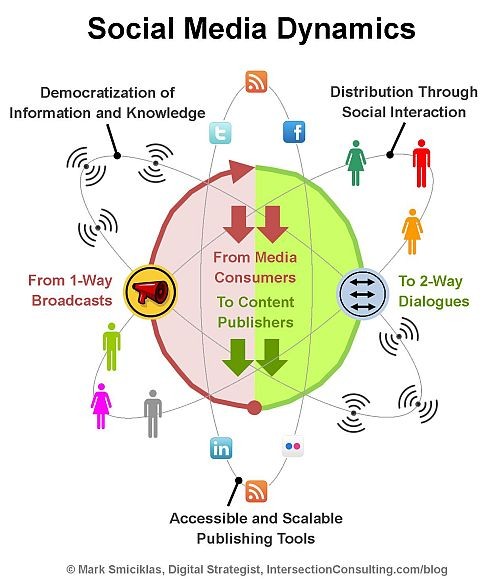
Undeniable Wave of Social Media Set to Change Consumer Behavior


Social Media looks like an undeniable force in the marketplace of today.

I am a newbie on Twitter, currently exploring, growing my following list and constantly amazed and gratified at the same time on the amount of knowledge which finds me, rather than I go googling, wikiing or binging.  I am also reading a book Twitterville by @shelisrael, a prominent social media journalist and speaker - in easy converational twitter style, provides you with case studies and reasons why Twitter is hot and relevant to individuals, small businesses as well as large enterprises in their respective personal, customer service, special promotions as well as knowledge transfers in this new information age.

[added 6-JAN-2010]: My blog is always WIP ... here is a great slide deck on "Twitter for Business" which I found from a Tweet and could not resist sharing from the http://www.viralnetworkers.com/


I search and buy books from Amazon.com - largely trusting the rating there more before I buy from Amazon.com or the bookstore (if I need to get the book like right now and not having to wait for the logistics US to Singapore).  Well for one thing, especially during these recessionary times, and discretionary spending and extremely crowded out schedules we live in, online sites like Amazon.com have been doing well - you can see from AMZN stock performance.

To add to the pudding, my wife shops for her clothing online - despite what many have disclaimed that shopping for clothes or accessories online is a big no-no.  And my son, since he was 4, has been googling, you-tubing (for his fix of cartoons, movie trailers) and playing online flash games -> he keeps going on his hyper-linking (and comes to me of course with a suggestive, "Daddy, did you know that there is this interesting Transformers game coming to the stores"  or "Avatar is so nice ... how about catching it this ... "  And of course, I turned to the Cloud crowd in Twitter to ensure I am booking online for a good show - never regretted the decision.

Take a look at this Social Media video which I found via a tweet from @promedia - certainly gives one a or rather several good reasons why social media is not a fad but rather a wave giving rise to a a fundamental shift in consumer behavior.

My following this journey in social media continues to evolve and I suspect will ramp up in an even more frantic pace in 2010 ... how is your journey?

Happy 2010 everyone!
Nelson Wee
@nelsonwee

Photo credit: Intersection Consulting / Foter.com / CC BY-NC